• HOME
  • ABOUT
  • ARTICLES
  • BOOK REVIEWS
  • BOOKS
  • OYSTER GROWERS
  • RECOMMENDED SITES

the oyster's my world

~ history of oysters and oyster cultivation

the oyster's my world

Tag Archives: aquaculture

DOMESTICATION OF OYSTERS AND THE TERRITORIALISATION OF THE SEAS

09 Thursday Oct 2014

Posted by Nigel in Uncategorized

≈ 1 Comment

Tags

aquaculture, domestication, Garrett Hardin, Jacques Cauvin, oyster cultivation, Pascale Legué, territorialisation, tragedy of the commons, wild oysters

As a psychologist, I can think of no better point of departure than that of the Lacanian use of ‘territorialisation’, a term which describes how the infant starts to differentiate and organise its chaotic body, its organs and orifices, exuding the inner flow of corporeal liquids, into a libidinal structure of erogenous zones and part-objects on the dry-land of its skin to underscore terrestrial man’s relation to the sea. The infant’s primal struggle from its watery cavern at birth onwards to escape its feeling of drowning or choking in its own fluids mirrors the epic struggle of the first creatures to reach the shorelines of the coast. I would suggest that the parallel is no coincidence, although historically, territorialisation in its more traditional sense is closer to the phenomenon of colonialisation and designates a will to conquer and control what can seen as a threat, unknowable, perhaps even coveted, using the battery of techniques and methods man has employed on terra firma, ever since the dawn of domestication. Indeed, the two concepts of territorialisation and domestication seem to have much in common. One anodyne definition of the latter has been any form of human husbandry of other animals, mainly mammals, although the concept refers nowadays often to the artificial selection, manipulation and breeding of organisms to bring about targeted, desirable changes in their genomic structure, Even though environmental adaption has also led to morphological and even genetic alterations (and this is one palpable reasons for the problems we have in taxonomic classifications) the greatest single factor has been human intervention and in this sense the most heuristic definition of domestication is ”that condition wherein the breeding, care and feeding of animals are, to some degree, subject to continuous control by man” (Hale, 1962). Man went, as the saying goes, from capture to culture.
CULTIVATION AS THE HIGHEST FORM OF CAPTURE
However, this supposedly linear progression has metamorphosed into more of a centripetal force since, with the increase in cultivation and further decline in capture, more and more attempts are being made to manipulate the genetic structure of the species cultured to improve existing brood-stocks, by providing a disease-resistant species, for example. And culture evolves to become an extreme form of capture.
So what has all this got to do with oysters, you might say? Well, possibly, it is the ultimate fate of the poor, sessile oyster, which minds its own business after its first two weeks of free-floating freedom as a veliger before looking for a homely piece of hard surface to settle down on and there remain for its entire life, that it becomes the perfect species to be domesticated, i.e. controlled by humans. It doesn’t provide any resistance nor register any form of complaint. Indeed, its very cultivation is a prime example of culture being the highest form of capture, because the oyster is removed from its very fixated position and becomes imprisoned in artificial environments, whether it be a hatchery, tank, bag, cages, crates or whatever, and where they are meticulously supervised by their human guardians. Aquaculture, often supported by landed businesses, can then exploit domestication to its logical ends, whilst fishing and fishermen are dismissed as a leisure-time pursuit and fade, like their wild stock, into a nostalgic past. It has been estimated that 97% of aquatic species present in aquaculture have been domesticated in the last 100 years, proving the rapidly developing dependence of aquaculture on domestication, which has been mainly due to the huge diversity of marine taxa and increase in our technical and scientific knowledge (Duarte, 2007).
DOMESTICATION AND ARCHAEOLOGY
As Jacques Cauvin, the French archaeologist pointed out (1994), domestication of animals was preceded by a symbolic process, whereby the spirit of the animal needed to enter into the human psyche, most likely with the help of shamanistic and burial rituals, so that some power over the wild would first be exercised on a mental and social level. Another way of expressing it would be to say that the animal world had to be humanised. We were forced into a relationship, and understanding of that wild world around us which was mediated by various ritualistic and symbolic enactments. Another archaeologist, Ian Hodder, took his cue from some earlier work of Cauvin and argued that ”the domestication of wild cattle and of the external wild more generally could thus be seen as an attempt to domesticate and control internal and social problems.” Further on he simply states that ”the process of domestication – the control of the wild – is a metaphor and mechanism for the control of society” (1990, 12), although I think it fundamentally concerned the process by which we learnt primarily to regulate ourselves. But that leads us into another bewildering world. Although man has long since moved away from the sea, from the original cave dwellings and huts on stilts on its endless shores (maybe partly due to a growing consumption of shellfish) and moved off into the interior, where the techniques of agriculture were mastered and safe settlements established, the sea had managed to retain its image and lure of a mythic space, boundless, unfettered and eternally free.
Although it seems as though oysters have been harvested for over 6000 years, according to the archaeological record, it is obvious that since the end of the 19th century, oysters have been more and more sucked into what now is called aquaculture after having been a source of subsistence food for the age-old community of hunter-gatherers, as typified by the fishing peasants along the Atlantic coasts of France and Ireland or by the Native Americans and later the watermen on the Chesapeake Bay, until overfishing, greed, urbanisation, pollution and, above all – overconsumption helped to deplete stocks. But even before all this took its toll, it was obvious there were other developments afoot to make oyster gathering more efficient, to regulate oyster reproduction, to privatise the foreshore or to build special oyster ponds (owned by the landed). The oyster couldn’t be left to itself to control its own destiny. Man had to step in to find ways to increase stocks for himself to fish.
CIVILISED OYSTERS FOR THE CIVILISED
Pascale Legué, a French anthropologist and urbaniste, wrote an inspiring book in 2004 about oyster cultivation in the Marennes-Oléron area,  and pointed out the progression of the space of oyster management as it changed from the shore, to the marais and claires of the former salt-pans, to the cabane, the work-shed, a clear inland move from the sea, the foreshore to the land, where the work of sorting, grading, cleaning, bagging, packing and purifying has been performed. This can mean that the commercial oyster may be handled as many as 40 times during its life cycle, and becomes more a personal property and creature belonging to its patron than a fruit de mer. Indeed the whole process of cultivation in the claires engendered a new set of new values, its own tradition of savoir-faire, and this added to the oyster’s status as a specialty, especially important on festive occasions, when oysters were considered to be the best food to offer – «C’est ce que on a de meilleur » (2004, 206). The wild oysters, which increasingly were the Portuguese oyster, Crassostrea angulata, gathered on the seashore were for the hoi polloi, not good enough for the tables of the bon-vivants, the well-to-do. There was something unbecoming and distasteful about the wild, uncultured and seascaped oyster. It used to be common to refer to the invasive Portuguese oyster as “the oyster of the poor”, « l’huïtre du pauvre » (2004, 163).
The whole process of cultivation is also a metaphor for the way a wild species was brought into the human domus (home) rather than the other way round as it had been before. No, for the owners and their equals, only the oysters that had been nurtured through the entire process of élevage (cultivation) and affinage (refinement/finishing) could be deemed fit enough. Domestication served in this sense, as a sign of a civilised mind and set of values, and a release from the fear of our savage instincts. So this symmetry of refined oysters for the refined members of the human race and wild oysters for the wild ones seems almost perfect! That is, as long as we don’t accuse the French of being snobs about their food!
So, according to Legué and the traditions of the Marennes oyster-growers, the only oysters that could be consumed were those that had been farmed (élevée) and then refined (affinée), their rubber stamp of human approval. However, as she added, there is nothing outwardly that distinguishes one farmed oyster from another wild one. Even though this may not be absolutely true, as there are certain tell-tale marks on some oysters that can help us to see differences, her point is that what we long for is something that is not at all visible or touchable. The shell is in a sense just a pebble (un caillou); its living part, that what we want to eat or taste, is hidden from us, and can never be known to us until it’s about to die. We cannot observe or become attached to its growth, its development, as we can with most other animals; we have only a relationship to this inanimate pebble, however beautiful it can be, that cannot respond or be brought into the human sphere. It seems more like a vegetable, and that is one reason why the French often say bête comme une huître! (stupid as an oyster) since it is so simply passive, helpless and can never be tamed (apprivoisée).
ARE OYSTERS EVER WILD?
Furthermore, the oyster is not “wild” really at all, quite the opposite! The notion that the oyster is wild is anthropogenic and in a way unfortunate, since from the oyster’s own perspective it is anything but wild; on the contrary it is singularly unassuming, docile, solitarily locked in its own world, staying put in perfect repose, looking after itself without any help from anybody, thank you very much. It is a perfect piece of self-regulating machinery. But if it is untouched or undomesticated by humans, then by definition it must be wild. So if it is a stone or just some “thing”, beyond the human realm, what can we domesticate? Nothing! It’s all a sham! But let’s look after them, just in case! Let’s catch ‘em whilst they’re young enough to swim around looking for something hard to settle on, rods, sticks, ropes – and why not Chinese hats (sounds a ball!) – and then later shut them up in bags, bins, baskets, boxes or whatever, almost as if it was an animal that needed to be put in a cage. Or let’s put them on the backs of lorries and ship them from one country to another so that they can grow more quickly and avoid contaminated water. For instance, some French companies buy spat in Arcachon or from land-based hatcheries, which is then shipped to Ireland, before being brought back to special areas in France so that they can formally be called by the appellation of that area, like the oyster Ostra Regal. And now they have been “bag-trained”, why not go one step further and dress them up and give them a shell manicure, by tumbling them every so often, which will give them such a polished appearance, such a rounded, handsome shell that will look ever so perfect on the restaurant table! Or else, they are given special names that often hide their hybrid provenance, but which sound good.
We put the oyster through this regime for our own sake, although, in my opinion, it is this aspect of ”not-me”, the alien in the oyster, that is one of the most powerful factors in the polarised sentiments the oyster often engenders in either hating or loving it! Because with the oyster as opposed to most other domesticated animals, no mutuality can ever be achieved (even though I recently read a story about a hospital in Chicago keeping oysters as pets for the terminally-ill!).
DOMESTICATION AS A FORM OF CONTROLLING NATURE
So all that the process of cultivation boils down to is a collection of controlling routines, traditions, methods that we have chosen to satisfy our needs rather than the oyster’s. Legué writes (2004, 207),«la domestication des huîtres tient exclusivement à leur confinement dans un espace accessible à l’homme, construit et amenagé par lui» (the domestication of oysters depends entirely on their confinement to a space, accessible to man, and built and managed by him). In this sense, it is more an issue of territorialisation than domestication.

So we have in our narcissistic world succeeded in convincing ourselves that what we do, our techniques, our savoir-faire, that we love and respect, is far more important to the oyster than anything else, which may to a certain extent be true! But anyway it’s the sea, that decides its taste, as well as the syzygies, the tides, the currents, the algae, in short nature, not us.

On the other hand, Legué seems to imply (2004, 252-4) that the progression onto the land freed the oyster-farmer from the vicissitudes of the elements that he had no control over, and he was able to develop skills and know-how that he could control. This in turn allowed him to change his mentality and attitudes that before (and in some cases still even today) imprisoned him in a narrow-minded, if not bigoted mind-set, which also caused damage and suffering. On the other hand, some of the rhetoric of cultivation, stewardship and know-how can mask a patronising attitude that accompanies the ideal of mastery and control over nature. The history of the Chesapeake Bay is a classic example of these conflicts (Keiner, 2010). However, it must be said that many traditional occupations of the sea have seen themselves overtaken and abused in some cases, by more land-based businesses that often run aquaculture companies. At the core of territorialisation, in this context, is the landscaping or expropriation of the sea by values and ideas that belong to the landed, urbanised and now indigenous population.
From this more anthropological perspective, there is a parallel between the territorialisation of the oyster-farming profession and also of the oyster itself, because it becomes transformed into a commodity, to be prepared for markets all round the country and overseas, at any time of the year, so that it can be consumed when we want. Yet, we call this activity sustainable, but for whom? Of course, it’s very sustainable for farmers, for consumers but is it for the oysters, which have been deprived of their “wild” identity, as sessile molluscs or for the environment, i.e. nature? There is some evidence that the oysters, especially the triploids, reared in hatcheries, become easily stressed (over-handled and moved around too often), and therefore are less able to cope with viruses and bacteria that are ever-present in the water-column. But this is all done to produce a more presentable oyster for seafood restaurants and the ever-expectant consumer.
Before, buying or eating oysters was more simple; in France, for example, you did it by numbers, as they were sold by sizes. Or you asked for oysters from a certain place, like Belon, or Cancale in Brittany. And in England, you asked for six Colchesters, or six Loch Ryans. Most of the finer restaurants in London still stick to that tradition. However, it’s becoming all the rage to give oysters fancy names. Names do stick and as with any food, labels, brands, provenance in some quarters mean everything, just like the trends in the later 19th century in America where Blue Points were the oysters everyone wanted and were served, whether they originated from there (on Long Island) or somewhere else, and in Paris where Belons were considered haut de gamme, the bee’s knees. The reverse side to all this, unfortunately, is the illegal traffic in oysters, articles about which appear in newspapers every so often.
DOMESTICATION AS HUMANISATION OF THE WILD
But now as we sit perusing the menu at any well-stocked oyster bar, into whose warmth and care, we and the raw, living oysters have been brought, we are mesmerised by the pretty names given to the molluscs we are about to devour and enjoy; and we want to find the perfect pairing of drink to wash them down with – all very civilised and all to calm those qualms about gnashing our teeth into the live flesh of those tasty molluscan morsels. Finally, the oyster has been “domesticated”; it has survived its circuitous journey to its final destination, our table. All these ritualistic ingredients are part of that domesticating process of not only the innocent, unknowing oyster but also of ourselves as waited-on restaurant guests. The humanising part of this process also aims at making the oyster consumable, edible, presentable, possibly more importantly so because the oyster is rarely cooked. Customarily, one of the characteristics of domesticated animals is that they are never eaten raw. On the contrary, it is the wild, the prey hunted, that may be eaten raw; among certain tribes, often it is considered an honour to drink the raw blood of the slaughtered animal before it is cooked, i.e the hunter becomes the hunted.
Our civilised rituals are, then, our sublimated way of entering into the spirit of our totem animal, that we humanise it, dress it up and overcome the “not-me” alienation that has dogged our relation with nature. We humanise nature, its species, at the same time as we see ourselves above or beyond nature, and maybe it was domestication that was our first act of hubris, when we decided to put ourselves above nature and bring nature into our domus (home), instead of realising that we were an integral part of this nature. In fact, domestication can be seen as verification of our innate fear of the wild, the raw and the untamed.
ROLE OF AQUACULTURE IN THE TERRITORIALISATION OF THE SEAS
Then there is the bigger question of aquaculture, which is one of the largest expanding areas in food production, since it is seen as a method of producing endless quantities of protein-rich food for the growing world population. Much could be sustainable but not all aquaculture is, despite certain popular perceptions, and we really need to think about the long-term effects of damage to the marine environment that certain aquacultural practices cause around the world. There is no doubt that, given its increasing mechanisation and automation, aquaculture is beginning to resemble its agricultural cousin. The sea has mainly been regarded as “the common heritage of mankind”, according to the UN Law of the Sea, but in the view of many suffered just because of this. According to the theory of the tragedy of the commons (Hardin, 1968), this is why overexploitation occurred, and in the end the only viable solution was some form of restriction, which in the guise of current political ideology was interpreted to mean privatisation or leasing of the seas and shoreline. The oceans are being used more, not just in the sense of deep-sea fishing or offshore or open ocean aquaculture, where raft-culture, for instance, with shellfish can take advantage of the stronger ocean currents. In some places, disused oil rigs are being converted into aquacultural facilities. The ocean is being “industrialised” in more ways than one: deep-sea exploration and sea-bed mining, offshore wind-farms, tidal power and wave energy generation, even the use of the ocean as a gigantic dump-site – all point to the growing territorialisation of our seas, and aquaculture plays one part in this “industrial” process. The oceans have long been the last frontier on the planet for man to penetrate. This fantasy extends even into the brainchild of some libertarians who envisage the foundation of ocean settlements, called “seasteading communities”, freed from any state interference.

Garrett Hardin foresaw a scenario where if the tragedy of the commons was not solved, annihilation of the human race was inevitable. There was no technical solution, because what was required was a radical change in the way we lived and the need for mutual coercion in imposing certain necessary restrictions on our freedoms. On fishing the oceans, he wrote this a few years later (1974), but amazingly enough 40 years ago, given that this is still as depressingly true today as it was then:
[talking about the destruction of common resources…] The same holds true for the fish of the oceans Fishing fleets have nearly disappeared in many parts of the world, technological improvements in the art of fishing are hastening the day of complete ruin. Only the replacement of the system of the commons with a responsible system of control will save the land, air, water and oceanic fisheries.

His words have been used as an excuse or justifications for the implementation of private ownership as the only way forward to secure sustainable stewardship of such common resources, and he was probably all in favour of such a solution himself. But as many have pointed out, such as the famous economist Elinor Ostrom, there are in fact many other solutions to managing common resources that can successfully involve local communities preserving and containing marine areas and species. But the march towards privatising the commons, the seas beyond national territorial boundaries goes on with relentless force.

So just as domestication rested on a need to tame the wild, territorialisation also seeks control the unknown, the unfettered, in this case the commons of the seas. In a way, this territorialisation can be viewed as the final instalment of our slow, self-imploding drive to see it as a right to exploit nature, as we return once again to – and we may just long for – our watery origins. Maybe the circle will close and the seas our final destiny, our primordial beginnings, into which we risk disappearing, unless we successfully solve the dire problems of global warming on our oceans (Charter, 2007).

REFERENCES:

Cauvin, J. (1994): Naissance des divinités. Paris: CNRS Éditions.

Charter, R (2007): Life on the Edge: the Industrialization of our Oceans.

Duarte, C. et al (2007): Rapid Domestication of Marine Species, Science, 316, no 5823, 382-3.

Hale, E. B. (1962): Domestication and the Evolution of Behaviour. In E. S. Hafez (ed), The Behaviour of Domestic Animals. Baltimore: Williams & Wilkins.

Hardin, G. (1968): The Tragedy of the Commons. Science, 162, no 3859, 1243-8.

Hardin, G. (1974): Lifeboat Ethics: the Case against Helping the Poor. Psychology Today, 8, 38-43.

Hodder, I. (1990): The Domestication of Europe. Oxford: Blackwell.

Kleiner, C. (2010): The Oyster Question. Athens: The University of Georgia Press.

Legué, P. (2004):La moisson des marins-paysans. Paris: Éditions de la Maison des sciences de l’homme.
 

THE STORY OF TRIPLOID OYSTERS

12 Thursday Apr 2012

Posted by Nigel in Uncategorized

≈ 24 Comments

Tags

aquaculture, cytochalasin B, huître des quatre saisons, meiosis, polar body, polyploidy, tetraploid oysters, triploid oysters

Long ago were the halcyon days of seas, brimming with all kinds of fish and molluscs, and laissez-faire politics that shunned any form of regulation on fishing, best exemplified by the opinions of one of the intellectual giants of the 19th century, Thomas Huxley, an autodidactic natural scientist, who dubbed himself “Darwin’s bulldog” because of his staunch defence of the latter’s controversial ideas, and who fathered a long line of Huxley geniuses. In his opinion, the bounties of the oceans were considered inexhaustible and nature left to its own devices, in the true spirit of free trade and liberalism, was almost infinitely resilient and could adapt to any pressure imposed by man so that the idea of any threat of overfishing was totally rejected. To be fair to Huxley, towards the end of his life, his tone changed, as he became more convinced that management of oyster beds needed to be introduced and recognised the dangers inherent in certain practices. Apart from France, most countries failed to introduce any viable system of regulation until it was too late. Nowadays, the tragedy of all this naivety, on the one hand and greed, on the other, is only too apparent. Stocks have fallen dramatically and fishing has now become far more regulated. Aquaculture is seen as an economic and environmental necessity to safeguard the finite resources of the seas. However, not all aquaculture is sustainable, and in a recent book by Colin Nash, The History of Aquaculture (2011), a pile of evidence is amassed of the unsavoury involvement of the nuclear power industry and multinational chemical conglomerates like Union Carbide, Dow Chemical and Sun Oil in aquaculture during the 1960/70’s which had devastating consequences for the marine environment. Aquaculture was seen as a way to buy good publicity and acquire a brand as a caring company.

Right from the beginning, science has endeavoured to involve itself in aquaculture. One of its pioneers, known in France as le père de la pisciculture, Victor Coste (1807-1873) was originally professor of embryology, and was instrumental in spreading interest in the methods of artificial collection of wild spat from oysters. His was the age of the first hatcheries which were established to study and allow fish spawn in artificial environments. But science was generally slow to latch on. The first experimental hatcheries on a larger scale were started in the 1930’s, in Conwy, Wales (UK) under first Herbert Cole (1911-1984) and later Peter Walne (1926-1978) and in Milford, Connecticut (US) under Victor Loosanoff (1899-1987). But most of the work only got off the ground after the 2nd World War. Selective breeding and artificial rearing of oyster spat in hatcheries were seen as ways to compensate for the disappearance of wild stocks and unpredictability of spawning in colder climates by providing an almost limitless source of spat for cultivation. The first commercial oyster seed hatchery opened on the US west coast in 1967, but like most hatcheries was beset with various biological problems.

So this was the scene when a young and ambitious student set about trying to create a hybrid oyster, one which had never existed in nature. The narrative begins in a wooded, hilltop research centre, now the Ira C. Darling Marine Center, overlooking the Damariscotta River, on the Maine coast in North Eastern America, where in 1979 marine biologists at the University of Maine were working on methods to help improve the local shellfish industry. It was important to find ways to make fish grow more quickly in the colder waters, to overcome the problems of erratic spawning at such low temperatures and to make more money by producing shellfish for consumption the whole year round. The idea of growing brood stock in hatcheries was not new but producing a sterile oyster was, one that would be denied nature’s most basic function, reproduction, so that meat content, flavour and texture could be improved. Instead of utilising its sugar reserves of glucose and glycogen for gamete production, and reducing its meat content by as much as 70%, the sterile oyster, it was thought, could be freed to harness this energy for meat and shell growth, thus reducing the time to cultivate a marketable oyster. Another benefit in a faster growing oyster was that it could reach market size before being vulnerable to particular types of parasites like the one causing Dermo disease (Perkinsus marinus). In a word, the sterile triploid was going to be created because it made irrefutably marketing sense.

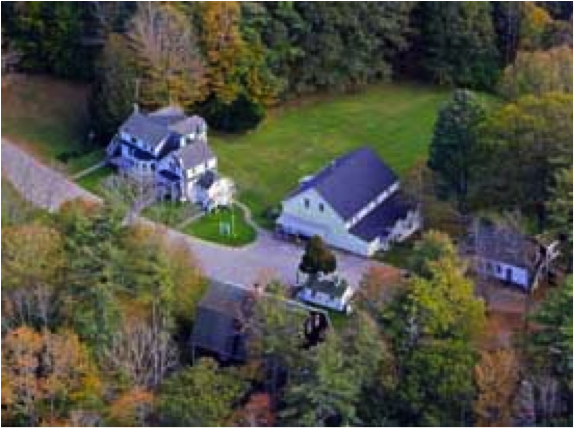
The Ira C. Darling Marine Center at the University of Maine

The story of the triploid oyster is a fascinating and to some extent frightening chapter in the history of aquaculture. It epitomises man’s desire to master and rise above the unpredictability of nature, but it also poses uncomfortable questions about the lengths to which man has gone in the pursuit to modify the ecology of nature. As Sir Maurice Yonge (1899-1986), a distinguished marine zoologist of his day, wrote in his Oysters on the future of oyster culture, “the more man interferes with nature the greater become the problems he creates (1960, 189).

Some elementary facts about genetic biology may be needed here. In the animal kingdom, nearly all species are diploid, that is, each of their somatic cells contains two sets of homologous chromosomes, one each from the male and female parent. Somatic cells give rise to the development of the individual body through the process of mitosis, in which cells divide through DNA replication, thus retaining their two sets of identical chromosomes. Germ cells, which are responsible for reproduction and formation of a new generation, are located in the gonads and develop into male and female gametes (i.e. sperm and egg). This process whereby germ cells recombine their genetic DNA molecules of homologous chromosomes (synapsis) and lose one of their sets of chromosomes and become haploid (a single set of chromosomes) progeny cells or gametes is called meiosis. As a couple of genetic biologists[1] so succinctly wrote, “the very essence of sex is meiotic recombination.” (We never learnt that at school!). Meiosis involves intricate phases of chromosomal separation, rearrangements and segregation before new haploid cells are formed, all within a relatively short period of time, although it is divided into two main stages, meiosis I and II. In each of these two stages, crucially so-called polar bodies are extruded (released) and serve as biological indicators of the development of meiosis, especially in the creation of triploid egg cells. However, the process of meiosis in many marine molluscs, including oysters is delayed and only completed after fertilisation, whereas in most other animals this process is achieved before fertilisation. It is this complicated and amazing process of meiosis that is manipulated, by inhibiting or blocking the release of the polar bodies either in meiosis I or meiosis II, in order to ensure that the egg retains its two sets of chromosomes. Normally, one set of chromosomes would be shed to make way for the set of chromosomes provided by the male sperm to secure the continuation of diploidy in the organism. If this manipulation succeeds, then the fertilised egg contains three sets of chromosomes, that is becomes a triploid cell, which then can undergo mitosis in the usual way. It was generally assumed that adult triploids were sterile since their three sets of homologous chromosomes could not successfully recombine during meiosis.

In humans and mammals generally, the condition of triploidy is always life-threatening, if not lethal, but in the non-vertebrate and plant world, there are many species, which exist in natural states of polyploidy (several sets of chromosomes). For instance, there are wild species of berries belonging to the genus of Vaccinium, like blueberries, cranberries and lingonberries that are polyploid (tetraploid and hexaploid), as well as diploid. There are even varieties of grapes that have been discovered to have this feature. Some common agricultural fruits, such as melons, bananas and oranges have also been manipulated into polyploids to grow bigger and more quickly.

Meanwhile back in Maine, research was geared to creating polyploid shellfish, and after a series of trial and error experiments, one technique, which had been used on clams as well as salmon and rainbow trout in Norway earlier in the early 1970’s, was selected with its fair share of serendipity. It involved the insertion of a toxic chemical, a mycotoxin, cytochalasin B, at a critical moment during meiosis into the newly fertilised egg to prevent the reduction of the two sets of the female chromosomes to one, so that it would end up with three sets (triploidy). Timing, duration and dosage levels were crucial and could in worst cases cause genetic abnormalities (aneuploidy) and high mortalities at various stages of larval development. The optimal point when the toxic chemical was inserted was during meiosis II, to inhibit the release of the second polar body and thus produce a triploid zygote (fertilised egg).

Induced Triploidy

The development of chemically induced triploid zygotes during meiosis II

This laboratory technique of using cytochalasin B was gradually perfected and ushered in a new era in oyster cultivation, in which an artificial, supposedly sterile species, not genetically modified however, the triploid, could be used to produce a more meaty and juicy oyster more quickly, and even during the summer, “r-less” months. The young graduate student behind this work was Standish K. Allen Jnr, who together with his supervisor Herb Hidu and mentor Jon Stanley, is credited with the innovative research, conducted with the Eastern or Atlantic oyster, Crassostrea virginica, although he did not bother to get his “invention” patented. Their paper[2] in 1981 already mooted the idea of creating oysters with an even number of chromosome sets, like tetraploids (four sets), which then could synapse and be fertile. However, the local oyster farmers in Maine were too conservative then to embrace this new technology and the hatcheries that existed were small and more experimental than commercial.

So Allen jetted off in 1983 instead to the Northwest, eventually to complete his doctoral studies with a well-known biologist in the field, Kenneth Chew, in Seattle, where the oyster industry was far more commercialised, and ready at work on the Pacific oyster, Crassostrea gigas. Since this latter oyster generally was unable to spawn naturally in the colder Pacific water, well-established hatcheries had already begun to produce diploid oyster seed for cultivators to grow. He and another researcher, Sandra Downing, successfully applied the technique in 1985 to large batches of oysters in a commercial hatchery setting, whose owners wanted the process patented. The patent was in due course refused on the grounds that an earlier publication (in 1981) of the process meant that it was no longer original. The end result of the application in 1987, however, did create a historical precedent, as a landmark court case, since it was admitted for the first time ever that patents could be granted to new species of animals, genetically altered or modified by science. Suddenly, the door to the world of modern biotechnology was thrown open wide by this ruling.

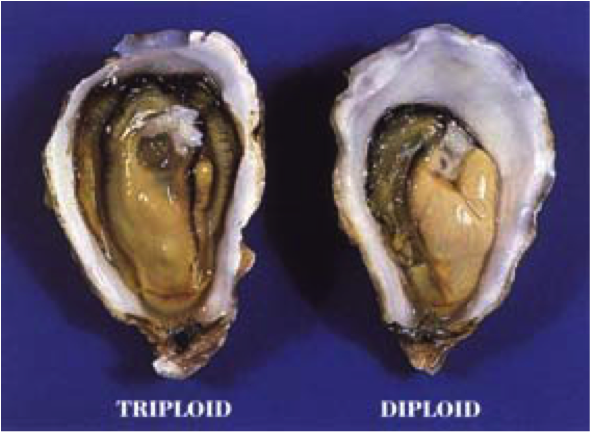
Even so, health concerns about the carcinogen, cytochalasin B, were growing, because of its links with cancer and the FDA (the Food and Drug Administration) was debating whether to ban its use in commercial hatcheries. The two researchers decided to try another method to produce triploids by subjecting oyster eggs to hydrostatic pressure, and this time their patent application was accepted. Another method that was also used was subjecting the onsetting phase of meiosis to temperature extremes. An alternative to cytochalasin B has been the use of an enzyme inhibitor, 6-dimethylaminopurine (6-DMAP). However, the downsides of these four forms of induced triploidy was that they resulted in high mortalities of the oyster larvae in the hatcheries due to the severity of the treatment, that the success rate varied and that some triploid oysters were unstable enough to revert back into diploids as they grew or were able to spawn themselves, and so were not wholly sterile. There were other contradictions that triploids produced earlier in meiosis (so-called meiosis I) grew faster but were liable to higher mortalities than triploids produced later during meiosis II. But faster growth could also have been due to the fact that triploid cells were 33% larger in volume than diploid cells. Since the whole process was fraught with risks and problems, other ways were sought.

Differences in growth between a triploid and diploid oyster after 36 months

Help came from another non-native source, a Chinese geneticist, who emigrated to Seattle in 1985 to pursue postgraduate work, Ximing Guo, and he wanted to go a step further and create a tetraploid oyster (with four sets of chromosomes) which if breeded with a natural diploid would then produce a “natural” triploid, thus avoiding the use of any toxic and cancerous chemical. The problem was that the diploid egg normally was too small to hold two extra sets of chromosomes and all his attempts ended in failure. Meanwhile, Standish Allen had relocalised back to the East coast and gained his first full-time academic post at Rutgers University and its Haskins Shellfish Research Laboratory in 1989. Within a few years, he managed to persuade Guo to join him there and the two started working together on the specific problem of creating a fertile triploid with large enough eggs, although from the outset triploid oysters were supposed to be completely sterile and unable to develop gametes. However, it was occasionally observed that such fertile triploids did exist. So once these triploid oysters and their large eggs were identified, Guo and Allen still resorted to cytochalasin B to ensure that the triploid eggs could be manipulated during meiosis I to accommodate another set of chromosomes from male diploids and then grow into oyster spat. It was found that it was absolutely necessary to monitor the timing of biological indicators in the actual meiotic events in the individual triploid female eggs rather than to follow more general criteria, if tetraploids were to be bred successfully, because of greater variability and asynchrony of triploid eggs than in diploid equivalents. Even then the average success rate after eight days was about 12% (though others have reported much lower figures), and the vast majority of the fertilised eggs were deformed aneuploids. Other critical parameters were salinity and temperature levels and the length of time spent by the eggs immersed in seawater. According to one paper written by these two scientists and two Chinese colleagues[3], the major cause for the formation of tetraploids was a mechanism during a crucial stage of meiosis II, called united bipolar segregation, when the homologous chromosomes are segregated into different cells. It is quite an ironic quirk of nature that the supply of sterile oysters depends on those very same oysters not being sterile at all!

Natural Triploidy

The production of natural triploid zygotes using tetraploid males and diploid females

In 1993, the new tetraploid oyster was created in the laboratory by Guo and Allen: this was the second time Allen had invented an artificial oyster, but now he wasn’t going to miss out on creating a patent for his work. When the supply of tetraploid oysters could be regularly guaranteed, they could be used, more often than not the male species, on a large scale to breed with female diploids so as produce “natural” triploid offsprings to be used for cultivation. These “natural” triploids were after only 9 months of growth as much as 50% larger than normal diploid oysters, which satisfied both the scientists and cultivators alike, and even a third larger than induced triploids. Because of the growing dependency of the oyster industry on hatcheries for supplying oyster seed of Pacific oysters, Crassostrea gigas, there has been a rapid response from both growers and hatcheries to develop the techniques of tri- and tetraploidy, especially the West Coast of North America. Now most of the oyster seed supplied by commercial hatcheries for cultivation there are triploids, produced with the various methods described, although batches produced with older methods often may contain diploid oysters.

United States Patent 

5,824,841

Guo ,   et al.

October 20, 1998

Tetraploid shellfish

Abstract

Provided by this invention are novel tetraploid mollusks, including oysters, scallops, clams, mussels and abalone. Also, provided are a method for producing the tetraploid mollusks and a method for producing triploid mollusks by mating the novel tetraploid mollusks with diploid mollusks.

Inventors: Guo; Ximing (Glassboro, NJ), Allen, Jr.; Standish K. (Mauricetown, NJ)
Assignee: Rutgers, The State University of New Jersey (New Brunswick, NJ)
Appl. No.: 08/895,077
Filed: July 16, 1997

The patent (United States Patent 5824841) was accordingly granted in 1998 to both Guo and Allen. They went on to set up a special start-up company for the creation of tetraploid molluscs with Rutgers University, 4Cs Breeding Technologies, Inc, which supplies its patented tetraploid oysters to licensed hatcheries wanting to breed 100% guaranteed triploids for cultivation.

So now this is the most common way of producing oyster triploid seed in hatcheries for the oyster cultivation, and this dependency on tetraploid technology has been growing by the year, especially in North America. Allen has continued to work on producing disease-resistant strains of tetraploids and it is easy to see how the research conducted by him and others, for instance, now at the Aquaculture Genetics and Breeding Technology Center within the Virginia Institute of Marine Sciences, on chromosome set manipulation will eventually lead, if not already, to genetic selection, to the development of specific strains of triploid oysters which not only grow faster and bigger, but will also have particular shell characteristics and be able to resist viruses, parasites and pollutants and no doubt even in due course – to the area of transgenics and genetic modification where DNA material from another species is introduced. In addition, there are concerns about the long-term risks over generations of using a mycotoxin, like cytochalasin B, in the creation of first-generation tetraploids, as very little is known about such effects.

Oysters have always been considered, like many other shellfish, as one of the last natural products and have often been marketed as such. If they gradually lose not only this status and also reputation, there may be consequences for their consumption. Fortunately there are stocks of wild oysters still being cultivated and even seed from these stocks, which is sold to other growers and hopefully this will continue and be preserved.

France is another country which has taken on board the benefits of growing triploids, known there as l’huître des quatre saisons – the oyster for the four seasons. Ever since 1997 when IFREMER – a State research institute for marine exploitation – purchased tetraploid oysters to breed, many cultivators have been enthusiastic about buying oyster seed from its hatcheries, which became commercially available 2000. However, ethical controversies still arise about their place and effects in the biological diversity of marine ecosystems and also among consumers who are sceptical to the product.

However, on the other hand, science and man are doing all they can to eclipse nature, but nature will have the last say or laugh whatever and man will always be playing a desperate catch-up game in which the rules are surreptitiously altered and which will probably lead us into an irreversible cataclysm. Already it is estimated that 85% of all native oyster reefs have been made extinct globally, and in many areas the loss is more than 99%[4]. But it is not just the reefs that have disappeared but probably more importantly entire marine ecosystems that the oysters basically provide: such services as water filtration, food and habitat for other species and coastal stabilisation and defence. If sustainability in oyster fishing is to be achieved, reef conservation and management need to be strictly enforced, including the establishment of protected areas and the ban of destructive harvesting practices. A concerted and joint effort from various stakeholders, such as fishermen, aquaculture companies, public agencies, environmental and conservation groups and other NGOs, is absolutely necessary if a long-term rebuilding of oyster reefs and sustainable harvests is to be achieved, rather than the short-sighted goals of put-and-take fishing that has often happened. But all this goes against the grain of the ways and shifts of a life of autonomy that have marked fishermen, watermen and sea-faring communities for centuries; they now also have had to resist being overwhelmed by urbanisation, gentrification and industrialisation. And they have seen the source of their livelihood invaded and taken over by conglomerates and with their backs against the wall have become all the possessive about their marine territory, possibly as a last desperate measure to safeguard its dwindling riches. In a way, who can blame them? Rather, it has been the inevitable spread of urbanised life in all its avatars that has killed the oyster beds, the frenzied demand and over-consumption, disease, pollution and acidification – in a couple of words, modern civilisation. So it is now down to those most exemplary carriers of the latter, the scientists, to come up with laboratory solutions that will repair and restore the depleted oyster banks that once filled our coastal waters.


[1] Villeneuve, A.M. & K. J. Hillers: Whence Meiosis? Cell, 106 (2001), 647-650.

[2] Stanley, J.G., S. K. Allen and H. Hidu: Polyploidy induced in the American Oyster, Crassostrea Virginica, with Cytochalasin B. Aquaculture, 23 (1981), 1-10.

[3] Que, H. et al: Chromosome segregation in fertilised eggs from triploid Pacific oysters. Crassostrea gigas (Thunberg), following inhibition of polar body 1. Biological Bulletin, 193 (1997), 14-19.

[4] Beck, M.W. et al:_Oyster Reefs at risk and recommendations for conservation, restoration and management. Bioscience, 61 (2011), 107-116.

The triploid diagrams were taken from the website of 4Cs Breeding Technologies, Inc. http://www.4cshellfish.com

Follow me on Twitter

My Tweets

ostreology

Tweets by ostreology

Recent Posts

  • CRUCIAL IMPORTANCE OF AN ω-3 FAT FOR EARLY AND FUTURE MANKIND August 5, 2019
  • NATIVE OYSTER RESTORATION ALLIANCE May 24, 2019
  • OYSTERS IN ART (5) February 28, 2019
  • OYSTERS IN ART (4) February 26, 2019
  • OYSTERS IN ART (3) January 29, 2019
  • OYSTERS IN ART (2) January 5, 2019
  • OYSTERS IN ART (1) January 1, 2019
  • THE MYTH OF OYSTERS AS AN APHRODISIAC June 5, 2018
  • DÄRFÖR ÄTER VI OSTRON MED SKRÄCK OCH FÖRTJUSNING October 31, 2017
  • OYSTERS IN ANCIENT GREECE April 22, 2017
  • OSTRAS DE CAMBADOS – FLAT OYSTERS FROM GALICIA, SPAIN September 22, 2016
  • TASTING BRITISH OYSTERS IN LONDON January 20, 2015
  • THE VENERABLE THOMAS DOWNING – BLACK OYSTER KING OF NEW YORK October 20, 2014
  • DOMESTICATION OF OYSTERS AND THE TERRITORIALISATION OF THE SEAS October 9, 2014
  • OYSTER NOISES October 16, 2013
  • OSTRÉICULTEUR TRADITIONNEL IN MORBIHAN October 9, 2013

Unknown's avatar

Create a free website or blog at WordPress.com.

Privacy & Cookies: This site uses cookies. By continuing to use this website, you agree to their use.
To find out more, including how to control cookies, see here: Cookie Policy
  • Subscribe Subscribed
    • the oyster's my world
    • Join 44 other subscribers
    • Already have a WordPress.com account? Log in now.
    • the oyster's my world
    • Subscribe Subscribed
    • Sign up
    • Log in
    • Report this content
    • View site in Reader
    • Manage subscriptions
    • Collapse this bar
 

Loading Comments...